
1. Fixed Braces in Dubai
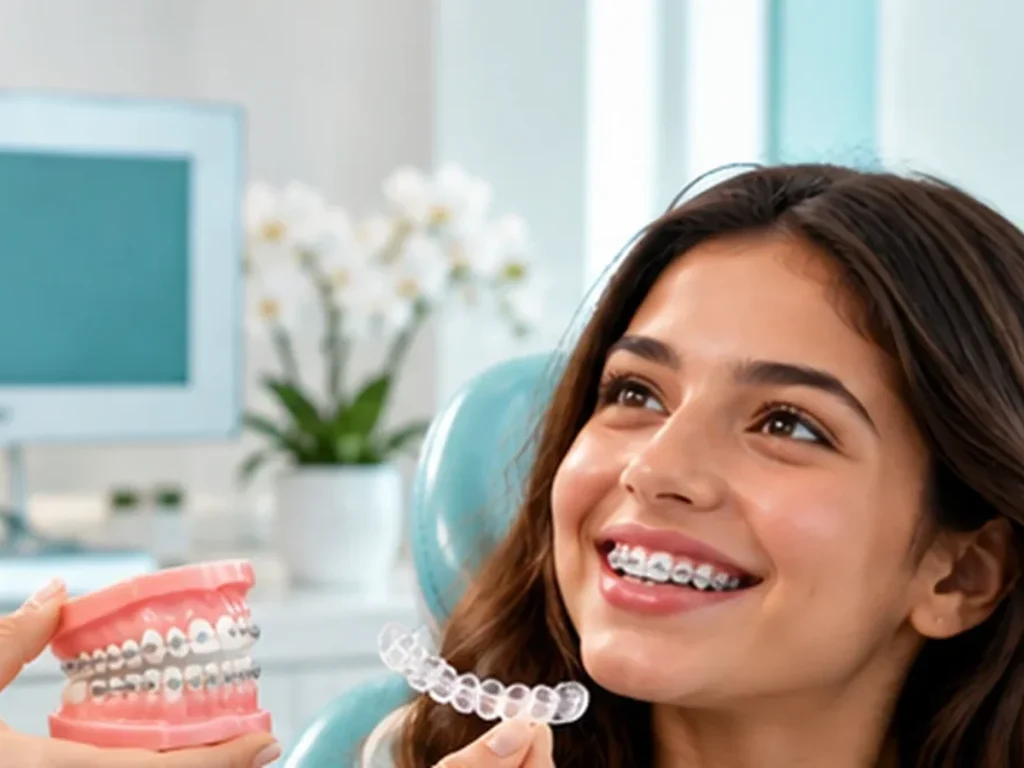
Fixed braces are orthodontic appliances attached to the teeth using brackets and wires. They apply controlled forces to gradually adjust tooth position and may be used to treat crowding, spacing and certain bite problems. Because they remain in place throughout treatment, patients must clean carefully around the brackets and attend regular reviews. The orthodontist selects the appliance and adjusts it according to the individual treatment plan. Retainers are usually needed after braces are removed.
2. Clear Aligners in Dubai
Clear aligners are transparent, removable appliances that gradually move teeth through a planned series of trays. They may be suitable for certain alignment and bite problems, but not every orthodontic case can be treated with them. Patients remove aligners for meals and oral hygiene, then wear them according to their clinician’s instructions. Treatment requires an assessment of dental health and tooth movement. Digital planning can help explain the proposed stages, but results vary between patients.
3. Removable Orthodontic Appliances in Dubai
Removable orthodontic appliances are devices that patients can take out of their mouths. Depending on their design, they may guide selected tooth movements, influence dental development or maintain tooth positions. Some are used during childhood, while others serve different purposes. Their effectiveness depends on the clinical indication and consistent use. An orthodontist determines the appropriate appliance, explains the wearing schedule and monitors progress through regular appointments.
4. Lingual Braces in Dubai
Lingual braces are fixed orthodontic appliances attached to the inner surfaces of the teeth, facing the tongue. Their position makes them less visible than conventional braces. They use brackets and wires to apply controlled forces and gradually move teeth. Patients may initially experience changes in speech or tongue comfort, and cleaning requires particular attention. Lingual treatment is not suitable for every case, so an orthodontic assessment is necessary before selecting this approach.
5. Ceramic Braces in Dubai
Ceramic braces are fixed orthodontic appliances that use tooth-coloured or translucent brackets. They work in a similar way to conventional metal braces, using wires to guide teeth towards planned positions. Their appearance can make them less noticeable, although they are not completely invisible. Ceramic brackets have different material properties from metal brackets, which may influence their suitability. Patients must maintain careful oral hygiene and attend regular orthodontic reviews.
6. Self-Ligating Braces in Dubai
Self-ligating braces use brackets with a built-in mechanism that holds the orthodontic wire in place. Unlike many conventional brackets, they do not require separate elastic ties around each attachment. Different designs are available, and the orthodontist selects the system according to clinical needs. Self-ligating braces do not automatically guarantee faster treatment or better results. Treatment duration depends on the complexity of the case, biological response and individual planning.
7. Orthodontic Brackets in Dubai
Orthodontic brackets are small attachments bonded to teeth during fixed braces treatment. Each bracket contains a slot that holds the archwire, helping transfer controlled forces to individual teeth. Brackets can be made from metal, ceramic or other materials, depending on the orthodontic system. Their positioning is important for controlling alignment and rotation. Because plaque can accumulate around brackets, patients need careful brushing and regular checks throughout treatment.
8. Orthodontic Archwire in Dubai
An orthodontic archwire connects the brackets of a fixed orthodontic appliance and helps guide tooth movement. Archwires are available in different materials, including nickel-titanium alloys and stainless steel. Their flexibility and stiffness influence how forces are delivered during treatment. The orthodontist may change wires as alignment progresses and different movements become necessary. Regular appointments allow the clinician to monitor the appliance and make adjustments when appropriate.
9. Malocclusion in Dubai
Malocclusion describes an irregular relationship between the upper and lower teeth or an alteration in their alignment. It may involve crowding, spacing, crossbite, open bite or other bite discrepancies. Not every malocclusion requires treatment, as its clinical significance depends on severity, function and oral health. An orthodontist evaluates tooth position, jaw relationships and individual concerns before recommending an approach. Treatment may involve braces, aligners or other appliances.
10. Dental Crowding in Dubai
Dental crowding occurs when there is insufficient space within the dental arch for teeth to align normally. Teeth may overlap, rotate or emerge outside their expected positions. Crowding can affect appearance and sometimes make certain areas more difficult to clean. Its causes may include tooth size, jaw dimensions and eruption patterns. An orthodontist assesses the amount of crowding and the overall bite before considering treatment with fixed braces, clear aligners or other appropriate techniques.
11. Dental Spacing in Dubai
Dental spacing refers to gaps between teeth, which may affect one area or several parts of the dental arch. Spaces can result from differences in tooth size, missing teeth or other dental conditions. A gap between the upper front teeth is commonly called a diastema. Not all spacing requires correction, particularly during certain stages of childhood development. An orthodontic assessment helps identify the cause and determine whether braces, aligners or another treatment may be appropriate.
12. Overbite in Dubai
Overbite describes the vertical overlap of the upper front teeth over the lower front teeth when the mouth is closed. Some overlap is normal, but an excessive overbite may be described as a deep bite. In certain cases, it can be associated with unusual tooth contacts or wear. An orthodontist evaluates the degree of overlap alongside the patient’s bite and oral health. Depending on the diagnosis, treatment may involve fixed braces, clear aligners or other orthodontic techniques.
13. Overjet in Dubai
Overjet is the horizontal distance between the upper and lower front teeth. It indicates how far the upper incisors project in front of the lower incisors and differs from overbite, which measures vertical overlap. Increased overjet may be related to tooth inclination, jaw position or both. The orthodontist examines these factors before considering treatment. The approach may vary according to age, dental development and the underlying cause of the discrepancy.
14. Crossbite in Dubai
Crossbite occurs when one or more upper teeth bite inside the corresponding lower teeth instead of outside them. It may affect the front teeth, back teeth or both. Crossbite can result from tooth position, differences in dental arch width or jaw relationships. Its significance depends on the individual clinical findings. An orthodontist evaluates the bite and dental development before recommending treatment, which may involve braces, removable appliances or expansion techniques.
15. Open Bite in Dubai
Open bite is a type of malocclusion in which certain upper and lower teeth do not touch when the remaining teeth are closed together. It commonly affects the front teeth and may interfere with biting into food. Possible contributing factors include tooth position, jaw development and prolonged oral habits. Treatment depends on the patient’s age, bite relationships and underlying causes. Orthodontic assessment is essential because some cases require more complex management.
16. Palatal Expander in Dubai
A palatal expander is an orthodontic appliance designed to increase the width of the upper dental arch in selected cases. It may be considered for patients with a narrow upper jaw or certain crossbites, particularly during growth. Expanders can have different designs and adjustment methods. Their effects depend on skeletal maturity and the clinical situation. An orthodontist evaluates jaw development and dental relationships before deciding whether expansion is appropriate.
17. Interproximal Reduction in Dubai
Interproximal reduction, or IPR, involves removing a carefully controlled amount of enamel between selected teeth. In orthodontics, it may create small amounts of space or help adjust tooth proportions during alignment. The technique can be used with braces or clear aligners when clinically appropriate. Because enamel does not regenerate, treatment requires careful planning and consideration of tooth anatomy. IPR is not necessary for every orthodontic patient.
18. Orthodontic Attachments in Dubai
Orthodontic attachments are small, tooth-coloured composite shapes bonded to selected teeth during some clear aligner treatments. They help the aligners grip the teeth and apply forces needed for particular movements. Their shape, size and position depend on the treatment plan. Not every patient requires attachments, and their number varies between cases. Patients should clean around them carefully and follow the prescribed aligner schedule. The clinician removes them when appropriate.
19. Orthodontic Retainers in Dubai
Orthodontic retainers help maintain tooth positions after active treatment with braces or aligners. They may be removable, such as transparent plastic appliances, or fixed behind selected teeth. Retention is important because teeth can continue to move after orthodontic treatment. The type of retainer and wearing schedule depend on individual needs. Patients should follow cleaning instructions, attend recommended reviews and report damaged or poorly fitting appliances.
20. Orthodontic Relapse in Dubai
Orthodontic relapse describes unwanted changes in tooth position after orthodontic treatment has finished. Teeth may gradually shift because of biological factors, continued growth, ageing or insufficient retention. The degree of movement varies between individuals. Wearing retainers as instructed helps reduce the risk, although it cannot eliminate every future change. Patients who notice significant movement or difficulty fitting a retainer should seek an orthodontic assessment.