Choosing between removable aligners and traditional braces involves more than deciding which appliance looks better. At Dental Studio in Dubai, our approach to orthodontic treatment begins with an assessment of tooth alignment, bite relationships and oral health. The comparison between clear aligners vs fixed braces helps explain how these systems work, what patients need to consider in daily life and why the most appropriate option depends on individual clinical requirements rather than appearance alone.
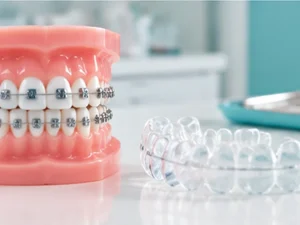
What Is the Difference Between Clear Aligners and Fixed Braces?
The main distinction concerns how the appliances are designed and worn. Clear aligners are transparent, removable trays manufactured to guide teeth through a planned sequence of movements. Patients generally remove them when eating or cleaning their teeth, but they must wear them consistently according to the orthodontist’s instructions. Their removability offers practical advantages, although it also makes patient cooperation particularly important.
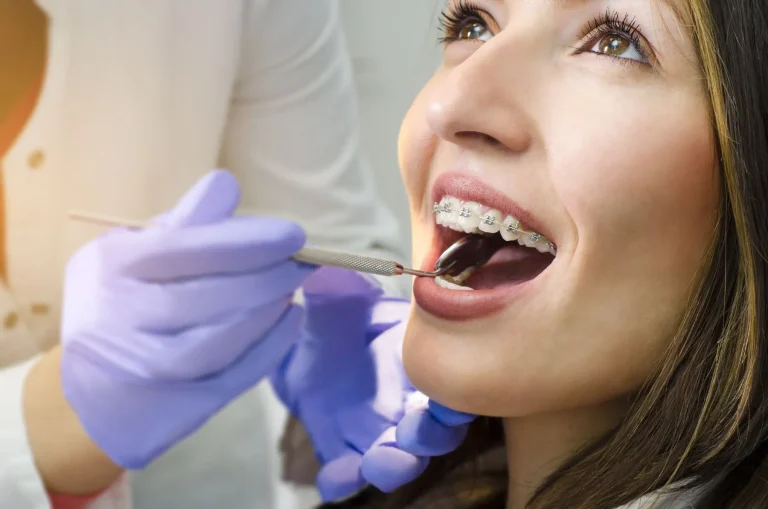
By comparison, fixed braces remain attached to the teeth throughout active treatment. They use brackets and wires to deliver controlled forces and can be appropriate for a broad range of orthodontic concerns. Because patients cannot remove them independently, the appliance works without relying on a daily insertion routine. However, cleaning around the brackets requires additional attention, and certain foods may need to be avoided to reduce the risk of damaging components.
How Does an Orthodontist Determine Which Appliance Is Suitable?
Before recommending an appliance, the orthodontist evaluates tooth position, the relationship between the upper and lower jaws and the condition of the gums and supporting tissues. One important concept is malocclusion, which describes an irregular relationship between the teeth or dental arches. Different types of malocclusion require different movements, so two patients with apparently similar smiles may need substantially different treatment plans.
Diagnostic records help clarify these differences. Depending on the case, the assessment may include photographs, digital scans and clinically indicated radiographs. The orthodontist also considers previous dental treatment, existing restorations and the patient’s ability to follow appliance instructions. These findings help establish realistic objectives and determine whether removable aligners, fixed appliances or another orthodontic approach is appropriate.
Clear Aligners vs Fixed Braces: Which Can Treat More Complex Cases?
The complexity of orthodontic treatment depends on the movements required rather than simply on how crowded or uneven the teeth appear. Some patients need relatively limited alignment, while others require correction of rotations, vertical tooth positions or bite relationships. Both fixed braces and aligners can address a range of concerns, but their suitability varies according to the clinical situation and the clinician’s treatment plan.
For example, dental crowding may require space management before teeth can be aligned. In selected aligner cases, small composite orthodontic attachments help the trays control particular movements. Fixed appliances use brackets and archwires to achieve different mechanical objectives. Neither system should be considered universally superior: treatment decisions must account for the patient’s anatomy, oral health, required movements and willingness to follow instructions.
What Changes in Everyday Life During Orthodontic Treatment?
Daily routines are an important part of the decision. Patients using aligners generally remove them for meals and oral hygiene, then reinsert them according to their prescribed schedule. Fixed braces remain in place while eating and brushing, so patients must pay particular attention to areas around brackets and wires. Regardless of the appliance, inadequate cleaning can increase the risk of plaque accumulation and gum inflammation.
The practical differences include several considerations:
- Eating: Aligners are usually removed for meals, while fixed braces may require avoiding foods that could damage brackets or wires.
- Oral hygiene: Removable trays allow direct access to tooth surfaces, whereas fixed appliances require careful cleaning around their components.
- Consistency: Aligners depend heavily on prescribed daily wear; fixed braces remain attached between appointments.
- Appointments: Both approaches require professional monitoring, although the review schedule and adjustments may differ.
Comfort and appearance can also influence patient preferences. Some people prefer the discreet appearance of transparent trays, while others appreciate not having to remember to insert an appliance. These considerations matter, but they should be balanced against the orthodontist’s clinical recommendations.
Are There Alternatives to Conventional Metal Braces?
Patients interested in less noticeable orthodontic appliances may encounter several additional terms. Ceramic braces use tooth-coloured or translucent brackets that can be less visible than conventional metal brackets. They still function as fixed appliances and require similar attention to oral hygiene. Their material properties and suitability must be considered when selecting a treatment system.
Another option is lingual braces, which are attached to the inner surfaces of the teeth. Their position makes them less visible from the front, but they introduce different considerations relating to tongue comfort, speech and cleaning. These alternatives are not appropriate for every patient. An orthodontist must evaluate the clinical indication and the characteristics of each appliance before recommending a particular system.
Why Is Retention Important After Braces or Aligners?
Orthodontic treatment does not end when the teeth reach their planned positions. After active treatment, the supporting tissues continue adapting, and teeth may move over time. Orthodontic retainers are therefore used to help maintain alignment. They can be removable or fixed, with the design and wearing schedule determined according to the patient’s needs.
Without appropriate retention, patients may experience orthodontic relapse, meaning that teeth shift after treatment. Relapse can also be influenced by growth, ageing and other biological factors, so no appliance can guarantee permanent alignment. The importance of retention is consistent with the broader principles of malocclusion assessment: orthodontic care requires consideration of tooth position, bite relationships and individual clinical circumstances over time.
Clear Aligners vs Fixed Braces: What Should Patients Remember?
The choice between clear aligners and fixed braces depends on the type of orthodontic problem, the movements required, oral health and the patient’s daily habits. Aligners offer removability and a discreet appearance, while fixed braces provide a continuously attached system that may be appropriate for different mechanical requirements. Both approaches require professional monitoring, careful hygiene and retention after active treatment.
At Dental Studio, orthodontic assessments focus on understanding each patient’s clinical needs and explaining the available options. A personalised evaluation is the appropriate starting point for deciding which appliance may be suitable.
Our Clinics in Dubai:
– Al Wasl: Villa 16/1194, Al Wasl Road, Umm Suqeim 2, Dubai
– Science Park: 4th Floor, South Tower, Dubai Science Park, Dubai
– JBR The Walk: Unit 8, Al Fattan Marine Towers, The Walk, Jumeirah Beach Residence, Dubai
– Jumeirah Beach Road: Villa 469B, Jumeirah Beach Road, Dubai
– Marina Gate: R-301, Jumeirah Living Marina Gate, Dubai Marina
– Tecom Barsha Heights: Suite 102, 1st Floor, Cayan Business Center, Barsha Heights, Dubai
– Umm Al Sheif: Villa 61, Umm Al Sheif Road, Dubai
– Jumeirah Park: Shop # GF-12, Pavilion Jumeirah Park East by Dubai Retail